
East and West
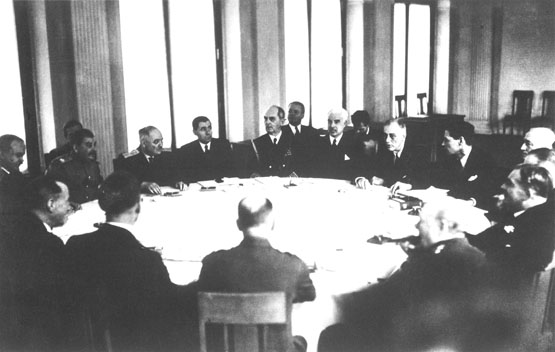 Yalta ConferenceThe underlying tensions and often-contradictory national and regional interests of the three big powers became more serious towards the end of the war when the future geography of a post-war Europe was being discussed at the Yalta conference in February 1945 and at Potsdam in July-August 1945.
The motives of the Soviet Union and its leader began to be questioned.
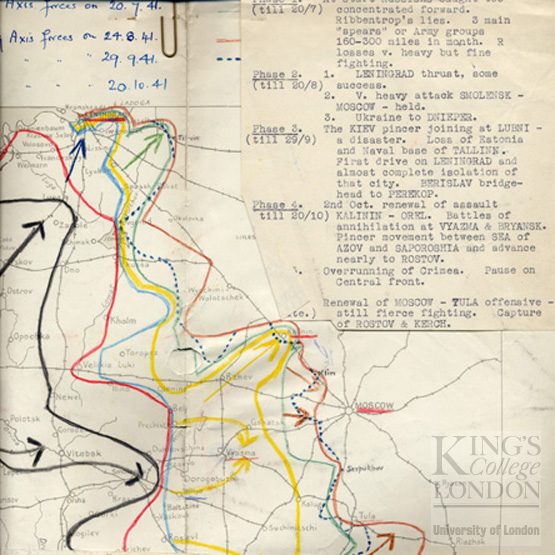 Eastern frontCriticism of the role of the western allies at Yalta has focused on the alleged betrayal of Poland and other Eastern European nations.
Some feared that Stalin might shrewdly outmanoeuvre Roosevelt and Churchill and win undue influence for the Soviet Union in Eastern Europe.
 Ismay to Averell HarrimanThe promise of free elections proved to be worthless as communist governments were installed by the Soviets in the aftermath of war.
Moreover, Poland's borders were moved to the west, ceding large areas of eastern territory to the Soviet Union.
Although Churchill began to recognise the Soviet threat, Roosevelt was distracted by the creation of the new United Nations organisation and ending the war against Japan. The reality of Soviet military occupation of Eastern Europe made intervention on behalf of Poland unlikely if not impossible.
In this exhibition
- Imperialism
- World War Two
- Origins
- British Empire and war
- The Allies
- East and West
- Cold War begins
- Balance of Power
- New millennium