
Anti-Japanese
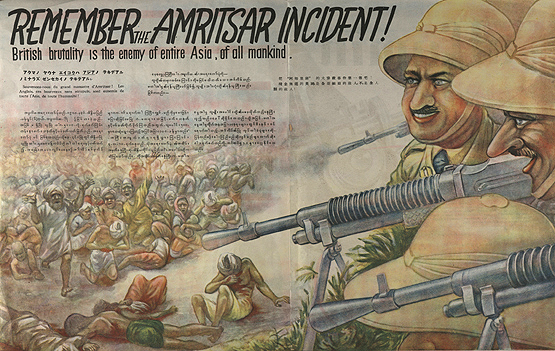 Japanese propaganda against British rule in IndiaDuring the Second World War, the campaign against Japan threw up its own propaganda challenges.
This was true of India, where Japanese propaganda sought to foment resistance to British rule: magazines and leaflets portrayed the British presence as motivated by greed.
 Standard Japanese soldierThe Japanese declared themselves leaders of an Asian resurgence against what they described as Anglo-American economic and cultural imperialism, and their propaganda reflected this aspiration.
 'Japan menaces world trade'Historical incidents such as the Amritsar Massacre in 1919, when hundreds of Indian protestors were killed when the British General, Reginald Dyer, ordered soldiers to open fire, were exploited to claim that the British could not now be trusted.
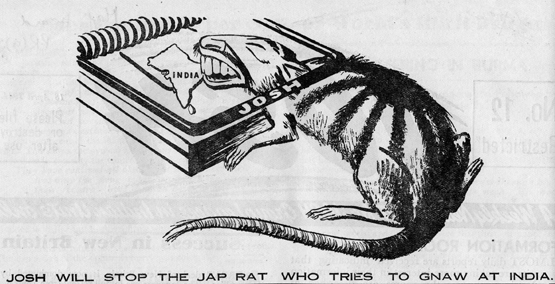 Japanese rat caught in a trap, from Josh newsletterThe British, Americans, Australians and others countered Japanese propaganda with their own.
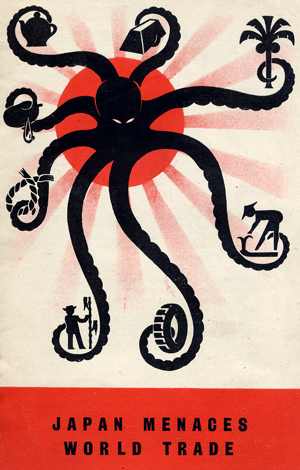
Japan was depicted variously as a spider or octopus menacing world trade and freedom, while racial stereotypes were exploited shamelessly to imply Japanese inferiority.
Some counter propaganda went further still: the 'Josh' newsletter distributed by Colonel John Heard at the Inter-Services Public Relations Directorate in India depicted the Japanese Imperial Army as a rat, variously drowning or caught in an Allied trap.
In this exhibition
- Background
- Types and Techniques
- Morale
- Counter propaganda
- Techniques
- Anti-Japanese
- Anti-British
- Allied relations